Learn with Strong & Connected
AI Therapists, Human Connection, and the Future of Mental Health Support
Artificial intelligence is now part of the mental health landscape. Whether people are ready for it or not, AI tools are already being used for emotional support, stress management, and mental health guidance. The real question is no longer if AI will be used, but how it will be used — and with what boundaries.
At Strong & Connected, our position is clear: AI is here to stay, and like any technology, it can be used in ways that support well-being or undermine it. The difference lies in design, safeguards, expectations, and human judgment.
This resource brings together what current research shows, what concerns experts raise, and how individuals and families can think clearly about responsible use.
What Are AI Therapists?
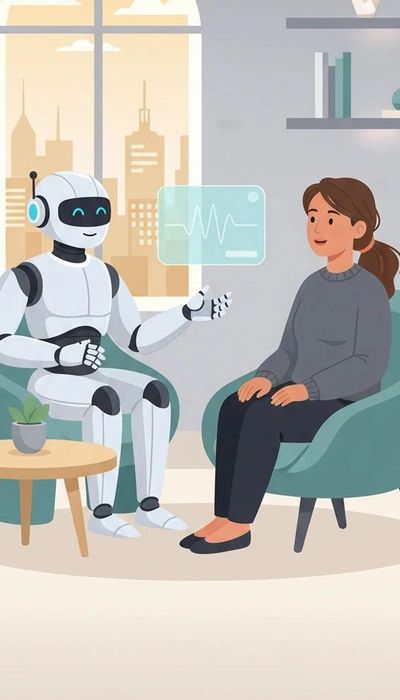
AI therapists are software tools that use artificial intelligence to simulate conversation and offer mental health–related support, such as emotional reflection, coping strategies, or guided exercises. Most are chat-based and available through apps or web platforms.
Importantly, AI therapists are not licensed clinicians, and they do not have human understanding, lived experience, or clinical responsibility. Their role is best understood as supportive tools, not replacements for professional care.
This distinction matters, especially as people ask whether AI can replace human therapists.
Can AI Replace Human Therapists?
Current evidence does not support replacing human therapists with AI. Therapy is not just about information or techniques; it relies on trust, attunement, accountability, and ethical responsibility.
However, research does suggest that some AI mental health tools can provide measurable benefits when designed carefully and used within clear limits.
A 2025 randomized controlled trial published in NEJM AI evaluated a generative AI therapy chatbot and found reductions in clinical-level mental health symptoms among participants.
https://www.nejm.org/doi/full/10.1056/NEJMcps2401872
This study is important, but it does not mean all AI therapy tools are effective or safe. It shows that specific systems, under specific conditions, can help with certain outcomes.
Key takeaway: AI may assist with coping and support, but it cannot replace human judgment, relationship, or ethical care.
Evidence for AI Mental Health Tools
Several large reviews help clarify what AI can and cannot do.
A 2025 systematic review and meta-analysis in the Journal of Medical Internet Research found that mental health chatbots produced small to moderate improvements in anxiety, depression, and stress, particularly among adolescents and young adults.
https://www.jmir.org/2025/1/e79850
Another 2025 JMIR review focusing specifically on generative AI mental health chatbots emphasized both promise and unresolved risks related to accuracy, safety, and over-reliance.
https://www.jmir.org/2025/1/e61256
Earlier meta-analyses in npj Digital Medicine similarly concluded that AI conversational agents can be helpful, but outcomes vary widely based on design, structure, and safeguards.
https://www.nature.com/articles/s41746-023-00876-6
Evidence summary:
AI tools can help some people some of the time — especially for skill practice and emotional awareness — but effectiveness is inconsistent and context-dependent.
Benefits and Risks of AI Therapists
Potential Benefits
- Immediate, on-demand access to support
- Low-cost or free entry point to mental health tools
- Reduced stigma for people hesitant to seek help
- Skill-based support (journaling, cognitive reframing, stress management)
- Useful between therapy sessions or while waiting for care
Real Risks
- Overconfidence and misinformation
- Missed signs of serious distress
- Emotional over-reliance on a non-human system
- Poor handling of crisis situations
- Privacy and data security concerns
AI is neither inherently good nor inherently harmful. Outcomes depend on how it is used, what limits are set, and whether human support remains central.
Limitations of AI Therapy
Understanding the limitations of AI therapy is essential for safe use.
AI systems:
- Do not understand context the way humans do
- Cannot take responsibility for outcomes
- May generate confident but incorrect responses
- Cannot provide ethical accountability
- Lack lived experience and emotional intuition
Researchers and clinicians consistently emphasize that AI should augment, not replace, human mental health care.
Risks of AI Mental Health Chatbots
One major concern is how chatbots handle vulnerable users. Research published in JAMA Network Open found that adolescents already use generative AI for mental health advice, raising concerns about safety boundaries and escalation.
https://jamanetwork.com/journals/jamanetworkopen/fullarticle/2824287
Scholars have called for stronger evaluation standards for mental health chatbots, especially around crisis detection and referral.
https://pmc.ncbi.nlm.nih.gov/articles/PMC11488652/
A calm, supportive tone does not guarantee safe guidance.
Teens Using AI for Mental Health
Teens and young adults are among the most frequent users of AI emotional support tools. Reasons include accessibility, anonymity, and comfort with technology.
This makes parent guidance and digital literacy essential, not optional.
Is AI Therapy Safe for Adolescents?
There is no single answer. Safety depends on:
- The design of the tool
- Clear limits and disclaimers
- Adult involvement and conversation
- Emphasis on real-world support
Parents should treat AI mental health tools like any other powerful tool: useful, limited, and requiring guidance.
Related internal resource:
Parents’ Guide to Technology and Emotional Health
👉 (Insert Strong & Connected internal link)
How AI Affects Human Relationships
AI doesn’t exist in a vacuum. It shapes how people relate to themselves and others.
When used thoughtfully, AI can:
- Help people reflect before difficult conversations
- Support emotional regulation
- Encourage insight and self-awareness
When used poorly, it can:
- Replace real connection with simulated interaction
- Reduce tolerance for human imperfection
- Create emotional avoidance rather than growth
AI should support connection, not substitute for it.
Ethical Concerns of AI in Mental Health
Ethical concerns include:
- Data privacy and informed consent
- Transparency about capabilities and limits
- Bias in training data
- Responsibility when harm occurs
The World Health Organization has emphasized the need for governance, accountability, and ethics in AI health tools.
https://www.who.int/publications/i/item/WHO-HEALTH-ETHICS-AND-GOVERNANCE-OF-ARTIFICIAL-INTELLIGENCE
Ethics are not optional when mental health is involved.
How to Use AI for Emotional Support Safely
For those choosing to use AI tools, responsible use matters.
Healthy use looks like:
- Using AI for skill practice and reflection
- Keeping expectations realistic
- Maintaining real relationships and support
- Setting time and emotional boundaries
- Seeking human help when distress escalates
Warning signs of unhealthy reliance include:
- Avoiding people in favor of AI
- Believing the AI “knows you better” than humans
- Feeling anxious without access to the tool
- Treating AI advice as unquestionable
Internal resource:
Building Emotional Resilience in a Digital World
👉 (Insert Strong & Connected internal link)
Privacy Concerns With AI Therapy
Mental health conversations involve sensitive information. Users should understand:
- What data is stored
- Who has access to it
- Whether conversations are used for training
- How data can be deleted
If a tool is unclear about privacy, that is a red flag.
The Role of AI in Therapy Going Forward
The future of AI in mental health is not replacement — it is integration.
AI can:
- Expand access
- Support early intervention
- Reinforce skills
- Reduce barriers to care
Humans must remain responsible for:
- Diagnosis and treatment
- Ethical judgment
- Emotional attunement
- Long-term care and accountability
The healthiest future is hybrid: human care supported by responsible technology.
Final Perspective
AI will be used in mental health — whether professionals engage with it thoughtfully or not. Avoiding the conversation does not protect people; clear guidance does.
Like any powerful technology, AI can support growth or cause harm. Outcomes depend on education, boundaries, ethics, and continued emphasis on human connection.
AI can help people cope. Connection helps people heal.
Related Strong & Connected Resources
- Emotional Connection in the Digital Age
- Helping Teens Navigate Technology and Mental Health
- Building Strong Relationships in a Tech-Driven World
(Insert internal links as appropriate)
Definitions
AI therapists (definition):
AI therapists are software tools that use artificial intelligence to provide mental health–related support, like guided coping exercises, journaling prompts, and emotional reflection. They are not licensed clinicians and should not be treated as a substitute for professional diagnosis or treatment.
AI therapy (definition):
AI therapy refers to using AI-powered tools to support mental wellness through structured prompts, skills practice, or coaching-style conversations. It can be helpful for coping and self-reflection, but it has clear limits and cannot replace human clinical judgment or relationship-based care.
Bottom-line stance (Strong & Connected):
AI is here to stay, and it will be used. Like any technology, AI can lead to beneficial or harmful outcomes depending on how it’s designed, used, and balanced with real human connection.
FAQs
1) What are AI therapists?
AI therapists are AI-powered chat tools that provide mental health support such as coping strategies, emotional check-ins, and guided exercises. They can be helpful for reflection and skills practice, but they are not licensed professionals and cannot diagnose conditions or provide medical treatment.
2) Are AI therapists safe?
AI therapists can be safe for many people when used with clear limits. Safety depends on the tool’s design, privacy practices, and guardrails. AI should be used for skill-building and support—not as the only source of help, especially when symptoms are intense or worsening.
3) Can AI replace human therapists?
No. AI cannot replace human therapists because therapy relies on relationship, accountability, ethical responsibility, and deep context. AI can support coping skills and self-reflection, but it cannot provide the same level of clinical judgment and human attunement required for therapy.
4) What evidence exists for AI mental health tools?
Research suggests some AI mental health tools can produce small-to-moderate improvements in stress, anxiety, or depression symptoms. However, results vary widely based on tool quality, user context, and safety features. Evidence supports AI as a supportive option—not a universal replacement for care.
5) What are the limitations of AI therapy?
AI therapy tools have key limitations: they can misunderstand context, generate incorrect advice, and lack ethical accountability. They also may not recognize when a situation requires urgent human support. The most responsible use treats AI as a tool for coping—not as an authority.
6) What are the benefits and risks of AI therapists?
Benefits: quick access, low cost, reduced stigma, skills practice.
Risks: misinformation, privacy concerns, over-reliance, and missed signs of serious distress.
The best outcomes come from using AI with boundaries and keeping real relationships and professional care in the picture.
7) Are AI mental health chatbots risky?
They can be. Risk increases when a chatbot makes clinical claims, lacks safety boundaries, or encourages dependence. A safer chatbot is transparent about limits, avoids diagnosis, supports healthy steps (sleep, coping skills, connection), and encourages professional help when needed.
8) Are teens using AI for mental health support?
Yes. Many teens and young adults use AI chat tools for emotional support because they’re available instantly and feel less intimidating than formal care. Because teens are still developing emotionally, adult guidance and ongoing conversations about safe use are especially important.
9) Is AI therapy safe for adolescents?
AI can be used by adolescents in limited, skill-focused ways—especially for journaling, coping exercises, and emotional labeling. It should not replace trusted adults, school supports, or clinicians. Parents should prioritize tools with strong privacy protections and clear “when to get help” guidance.
10) How does AI affect human relationships?
AI can improve relationships when it helps people pause, reflect, and communicate better. It can harm relationships when it replaces real connection or reduces tolerance for normal human imperfections. Healthy use strengthens communication; unhealthy use becomes a shortcut that avoids real intimacy.
11) Can AI help with anxiety or stress?
AI tools can help some people manage anxiety or stress by guiding breathing, grounding, reframing thoughts, or tracking habits. They work best for mild-to-moderate stress and skill practice. If anxiety is severe, persistent, or impairing daily life, human support is recommended.
12) What are ethical concerns of AI in mental health?
Major ethical concerns include privacy, consent, data use, bias, transparency, and accountability if harm occurs. Because mental health involves vulnerability, tools should clearly state what they do, what they don’t do, how data is handled, and how users are guided toward real-world support.
13) What privacy concerns exist with AI therapy tools?
Privacy concerns include what data is stored, who can access it, whether it’s used to train models, and whether users can delete it. A red flag is a tool that is vague about data practices. Users should avoid sharing identifying details and keep sensitive information minimal.
14) How can AI be used for emotional support safely?
Use AI safely by setting clear goals and limits.
Best practices:
- Use for skills (coping, reflection), not diagnosis
- Set time boundaries
- Keep human support active
- Seek professional help if distress increases
AI should support connection, not replace it.
15) What are signs of unhealthy reliance on AI?
Signs include avoiding people, feeling anxious without the chatbot, trusting the AI over real relationships, or using it to escape difficult feelings instead of working through them. If AI use increases isolation, it’s time to rebalance toward real-world support and professional guidance.
16) Can AI tools be used between therapy sessions?
Yes. Many people use AI between sessions to journal, practice coping skills, or organize thoughts for therapy. The healthiest approach is to treat AI as a companion tool that supports your therapy goals—not a substitute for your therapist or treatment plan.
17) Are AI therapists regulated?
Regulation varies by region and by how a tool is marketed. Many consumer chatbots are not regulated as medical devices. Because oversight is uneven, users should evaluate tools based on transparency, privacy protections, evidence, and clear safety boundaries.
18) How accurate are AI mental health chatbots?
Accuracy varies. AI can offer helpful suggestions but may also produce incorrect or misleading information. Treat responses as general support, not clinical truth. A good rule is: if it involves diagnosis, medication, safety, or high-stakes decisions, check with a qualified professional.
19) Should parents monitor teens’ use of AI mental health tools?
Yes—through conversation more than surveillance. Parents should ask what tools are being used, what teens like about them, and what boundaries feel healthy. The goal is guidance, safety, and connection, not punishment. Shared expectations work better than secrecy.
20) What role will AI play in the future of therapy?
AI is likely to expand access, reinforce coping skills, and support early intervention. Humans will remain essential for diagnosis, complex care, ethical responsibility, and deep relational healing. The healthiest future is hybrid: responsible AI + strong human support.
21) Is AI good or bad for mental health?
AI is neither inherently good nor bad. Like any technology, outcomes depend on design, use, and boundaries. Used well, AI can support coping and reflection. Used poorly, it can increase isolation, misinformation, and dependence. People—not tools—should remain at the center.
22) What is the most important thing to remember about AI therapists?
AI can support coping, but it cannot replace human connection. The safest, most effective approach uses AI as one tool among many—alongside relationships, professional care when needed, and real-world habits that build resilience.